



3D Printing Build Orientation: What Buyers Should Approve Before a Repeat Order
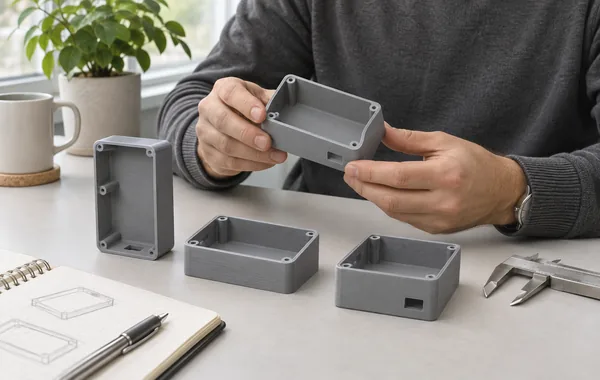
Before reordering a 3D-printed part, confirm whether the supplier will use the build orientation approved for the original samples. For a loaded feature or mating face, record the approved orientation and the checks used to accept it. Do the same for visible surfaces with appearance requirements. The CAD file defines the shape; build preparation determines how it sits in the printer.
This guide is for buyers ordering repeat batches of plastic printed components. It covers the agreement between purchasing, engineering and the supplier after a printing process has been selected. For the earlier process decision, see our SLA, SLS and MJF comparison.
Why the same model can need another review
A supplier may propose rotating a part to fit a different build arrangement, improve surface finish or reduce support cleanup. Review the proposal against the features that matter to your part.
Formlabs’ SLS orientation guidance explains that orientation and placement can affect layer visibility, warping and the fit of mating parts. These considerations still apply when surrounding powder supports the part. The guide is specific to the manufacturer’s workflow; its suggested angles and placement rules should not become universal purchasing requirements.
Ask the supplier which aspects of its proposed build preparation could affect your acceptance criteria. Agree which controls belong in the order and which changes require another review.
Mark the features that make orientation important
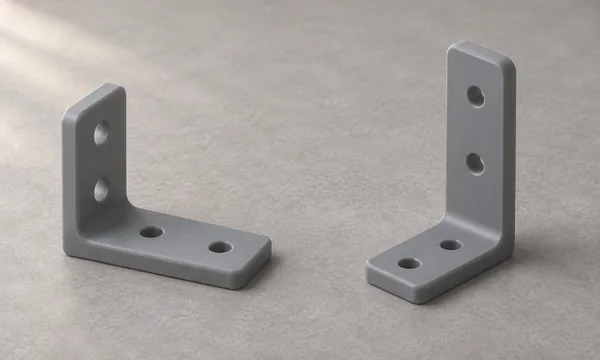
Start with an annotated model or drawing. Show the load direction for a clip or bracket, the faces that locate another component, and the surfaces visible in normal use. Explain what each feature must do.
| Part requirement | What to show the supplier | What to agree before a repeat build |
|---|---|---|
| A clip flexes during assembly | Deflection, load direction and required use cycles | Build-preparation controls and the part-level test needed to support approval |
| A cover mates with a base | Mating faces, locating features and component revisions | Relevant orientation constraints and finished-condition fit checks |
| A face is visible to the customer | Cosmetic zones and an identified appearance reference | Acceptable layer texture, support-contact locations and finishing |
| A small bore locates a pin | Bore size, position and measurement reference | Whether printing alone or an agreed secondary operation will meet the requirement |
If two priorities conflict, name the one that controls the decision. A cosmetic improvement may be unhelpful if it moves support contacts onto a locating surface. Engineering should resolve that trade-off before purchasing approves the repeat batch.
Describe orientation with a usable reference
Instructions such as “print flat” or “same as last time” are easy to misunderstand. The part may have several flat faces, and the person preparing the repeat build may not have handled the original sample.
Ask for an agreed view showing the part relative to the build platform and build direction. Identify the part number, model revision, reference faces and any controlled rotation. If the supplier maintains the detailed preparation file, agree on a record identifier that the buyer’s approval can reference.
State whether the view is a mandatory constraint or a proposal for supplier review. Where only selected features need control, allow the supplier to explain how it will satisfy them. Leave the rest of the build layout to the supplier unless the project requires tighter control.
Also ask about position within the build. The same orientation at a different location can expose the part to different cooling conditions in SLS. Ask which placement or nesting changes need review for this geometry, and retain the supplier’s answer with the approval.
Review material data in its stated direction and condition
For loaded parts, request the exact material grade and the data relevant to the proposed manufacturing route. Check which property is being reported, how the test specimen was oriented and how it was conditioned. A tensile-strength value alone does not answer a question about a clip’s repeated deflection.
Formlabs publishes orientation-specific stress-strain curves for selected SLS powders. It describes the curves as representative results from single conditioned specimens and notes that actual results can vary with conditioning and powder history. Use that evidence to frame questions about the selected material, rather than assigning its values to another grade or finished component.
Agree any representative-part testing with the technical owner. Define the load or deflection, environment, number of cycles and acceptance criterion where they are relevant. Keep that test requirement connected to the approved build and delivered condition.
Agree where support contacts and cleanup are acceptable
For SLA parts, include a marked view of surfaces where support contacts would interfere with fit, appearance or access for finishing. Have the supplier review those restrictions against the support needed to produce the part.
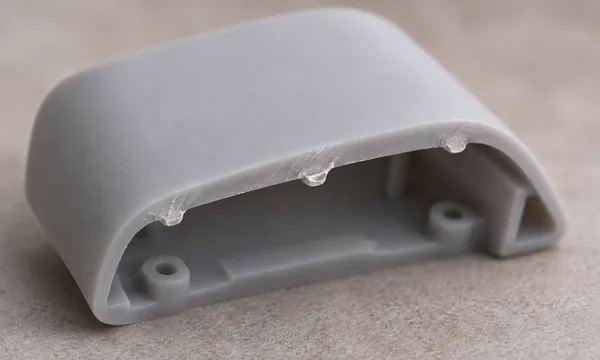
Formlabs’ support-removal guidance uses a gear to show how support placement on teeth can interfere with fit and function. It also notes that further finishing may be needed to remove contact marks. Check support contacts on functional surfaces even when the outside of the part looks acceptable.
Specify the delivered condition: support removal, cleaning, any required post-cure, and agreed sanding, smoothing, coating or machining. Ask which dimensions and surfaces will be inspected after those operations. If a sample was hand-finished differently from the proposed batch, record the difference before treating it as the production reference.
Make the sample approval useful for the next order
Keep a short approval pack that purchasing can send with a reorder. Include:
- The released model and drawing revisions.
- The selected process and material grade.
- The approved orientation view or build-preparation record reference.
- Critical faces, support-contact restrictions and agreed finishing.
- Sample identification, inspection results and any functional-test record.
- The changes requiring advance review and the person authorized to approve them.
Our guía de inspección del primer artículo covers the broader sample-release process. For orientation control, the additional question is whether the records let someone connect the accepted sample to the preparation used for later parts.
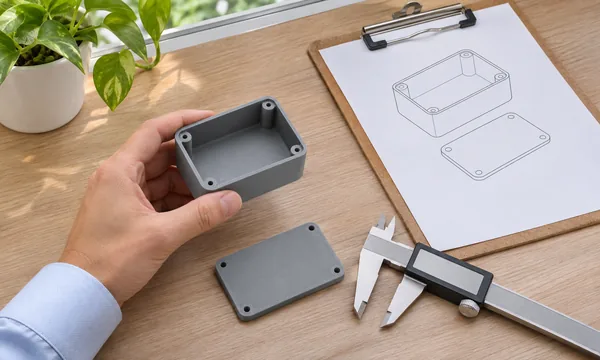
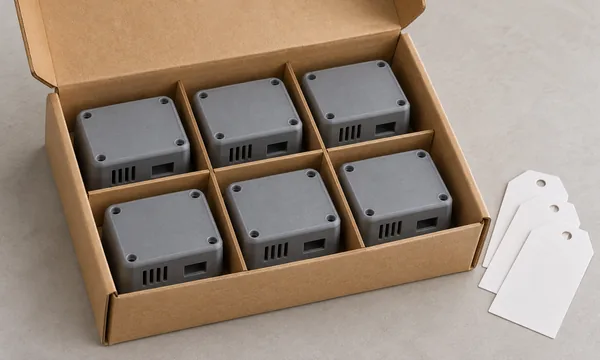
Consider a hypothetical printed enclosure cover approved with a particular orientation and finishing route. Before the next batch, the supplier proposes a rotation to improve build packing. Ask which mating and cosmetic features could be affected, then agree the comparison needed. Approval might follow a targeted fit and appearance review, or engineering might require further evidence. Record the agreed checks before the supplier starts the changed build.
Handle a proposed change before the batch starts
Ask the supplier to identify the existing preparation, proposed change, reason and affected order quantity. Review any consequences for finishing, inspection, price and delivery alongside the technical evidence.
Record whether the decision applies to a trial, one batch or future production. Preserve any temporary exception with its quantity and conditions. When the drawing itself changes on an open order, use the separate supplier ECO checklist to manage that revision.
At receiving, match the shipment to the agreed part revision and records, then perform the specified checks. Surface appearance alone may not reveal how a part was oriented. If the build reference is missing, request the evidence before deciding whether this is a documentation gap or a manufacturing departure.
What to send Zenbot for review
La servicio de impresión 3D states that orientation, support strategy and other build requirements are confirmed after engineering review. Send the current files, quantity, approved sample records, critical features and any proposed change. Ask which build controls and inspection records can be included in the quotation. Confirm the available records and approval steps for your order.
Preguntas frecuentes
1. Does the same CAD file guarantee the same build orientation?
No. The model can be rotated during build preparation. Where orientation matters, reference an agreed view or preparation record with the order.
2. Should a buyer choose the print angle?
Give the supplier the functional constraints and request a proposal unless engineering has already fixed the orientation. Review competing requirements before approving the build.
3. Does orientation matter for SLS without dedicated supports?
Yes. Orientation and build placement can affect surface appearance, distortion and mating fit. Review the actual geometry and supplier’s process.
4. Can a material data sheet approve a loaded printed part?
It informs the review, but the part’s geometry, build conditions and intended use still need assessment. Agree representative-part testing when required.
5. Must every orientation change repeat the full first article inspection?
The required scope depends on the affected characteristics, contract and applicable requirements. Agree the review and evidence before the changed build proceeds.
6. Can support marks be accepted on hidden surfaces?
Sometimes, provided they meet the agreed criteria and do not affect fit or function. A hidden locating face may still need tight control.
7. Can I confirm orientation by looking at delivered parts?
Visible layer texture may provide clues, but it is not a reliable substitute for the agreed build records, especially after finishing.
8. What should accompany a repeat-order request?
Send the released files, process and grade, approved build reference, finished-condition requirements and acceptance records. Identify any requested changes explicitly.

Acerca del equipo de Zenbot
El equipo de Zenbot elabora recursos sobre fabricación y compras para Zenbot China. Nuestras guías abarcan mecanizado CNC, fabricación de chapa metálica, impresión 3D, moldeo por inyección, PCBA y preparación de solicitudes de presupuesto, y ayudan a los equipos de ingeniería y compras a comparar opciones y definir los requisitos del proyecto. La viabilidad técnica, las especificaciones, los precios y los plazos de entrega requieren confirmación para cada proyecto.