



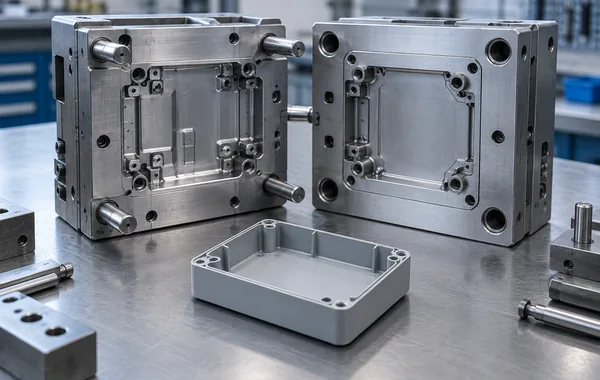
Injection Mold Transfer Checklist: Records, Machine Fit and Restart Approval
Before transferring an injection mold, agree what will move, collect the current tool and part records, and have the receiving supplier review the mold against its proposed machine and process. Then define the trial results needed to restart production. An approved part from the previous supplier is a useful reference, but it does not approve production at the new site.
This injection mold transfer checklist is for purchasing and engineering teams moving an existing production tool. It is different from choosing a new molding process or approving a new mold design: the immediate question is whether the receiving team has the equipment, information and acceptance plan needed to use the asset you already have.
Decide whether the tool is ready to move
Start with a joint review involving the buyer, the outgoing custodian and the proposed receiving supplier. Name a contact for the commercial release, tooling review and part-quality decision. Finish this review before booking the move.
Keep three decisions separate: permission to release the asset, readiness to install and trial it, and approval to ship parts made at the new location. Record the scope of each approval so dispatch authorization cannot be mistaken for permission to produce.
| Checkpoint | Evidence to review | Decision before proceeding |
|---|---|---|
| Before dispatch | Tool identity, agreed transfer scope, records, condition and release authorization | Are the correct assets and records ready to leave? |
| Before installation | Receiving inspection, machine-interface review, auxiliaries and any repair proposal | Can the tool be installed and trialed under the agreed plan? |
| Before production release | Trial parts, inspection results, unresolved deviations and required product validation | Who has approved the new production route, and for which revision? |
These are planning checkpoints, not a universal qualification standard. The required evidence depends on the part, customer requirements and consequences of failure.
Build a transfer pack tied to the actual mold
Use a tool identifier that appears on the asset list, condition photographs and records. Link it to the current part number, drawing revision, cavity configuration and any replaceable inserts. If several molds make similar-looking components, identify each one separately.
Sussex IM’s tool-transfer questionnaire asks for current part and tool data, recent samples, process records, maintenance history, quality requirements and known defects. Those categories are a useful starting point; the quantities and qualification requirements in another supplier’s checklist are not automatically your order requirements.
- Released drawings and CAD, resin grade, color, finish and critical interfaces.
- Available tool drawings, cavity and insert identification, dimensions, weight and connection details.
- Available process sheets, recent part results, known defects and any temporary operating restrictions.
- Maintenance and repair records, modifications, available cycle count and outstanding work.
- Identified approved parts, relevant limit samples, gauges and inspection instructions.
- Controllers, cables, spare components, fixtures and other equipment included in the move.
Assign someone to resolve each missing item by an agreed date. Mark obsolete drawings and unknown revisions rather than presenting them as current. Ask the receiving team which gaps prevent a feasibility decision, which require investigation and which can be closed during the agreed trial.
Confirm authority to release the mold and the agreed scope of files and equipment. Do not assume that paying a tooling invoice settles every release or data-access question. Resolve unclear contractual rights with the relevant parties and qualified advisers. This article addresses the technical handover, not legal entitlement.
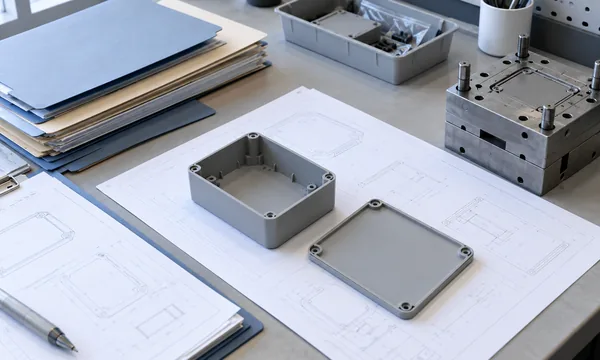
Check machine fit before shipping
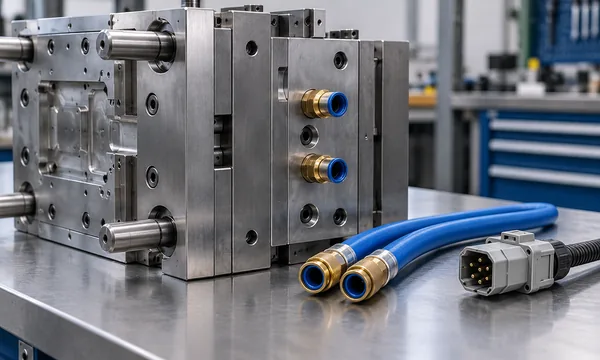
Nominal clamping tonnage is only one item in the receiving review. Rosti’s tool-transfer guide also identifies barrel size, platens, fittings, couplings and auxiliary requirements as matters to assess. A mold that ran successfully at one site may need changes before it can run on the proposed equipment.
Ask the receiving engineer to review the tool envelope, mounting arrangement, opening and ejection requirements, nozzle interface, cooling connections and any electrical or other auxiliary connections. Include the actual controller and accessory details where relevant. The review should use the proposed machine, not a generic statement that the supplier has molding equipment.
Record the result as compatible, requiring an agreed change, or unresolved. For a proposed modification, ask what will change, how it could affect the tool or part, what it costs and what evidence will be checked afterward. Require an agreed modification scope before work begins.
Record condition at both ends of the move
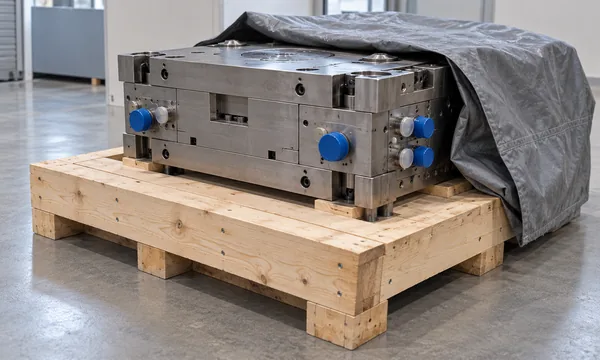
Before dispatch, retain dated photographs and a condition record that identifies visible damage, known wear, outstanding repairs and the accessories packed with the mold. Where practical, keep identified parts from the last production run with their relevant inspection results. A sample without a revision or production context can be difficult to compare later.
Agree packing, preservation, handling and receiving responsibilities with the organizations carrying out the move. The appropriate method depends on the tool and its components; a general buyer checklist cannot specify a safe lifting or preservation procedure.
At receipt, compare the tool and accessories with the dispatch record before running it. Record discrepancies and agree their disposition. Photographs help establish what arrived, but they do not prove that the tool is mechanically sound or that its output meets the drawing.
PTI’s transfer process describes tooling and process assessment, approval of proposed refurbishment, and an agreed validation protocol. Treat those as separate decisions in your own plan rather than giving blanket permission for repair and production.
Agree what the restart trial must demonstrate
The receiving supplier needs a defined part requirement and a trial objective. Previous process settings provide background; they should not be treated as automatic instructions for a different machine or production setup.
Before the trial, agree which cavities and part characteristics will be represented, how samples will be identified, when measurements will be taken and which functional checks are required. Keep dimensional, cosmetic and functional results distinct. Zenbot’s molded-part appearance guide explains how to make cosmetic references usable; its guía de inspección del primer artículo covers the broader relationship between drawing requirements and recorded results.
A suitable restart record identifies the tool, part revision, material, trial conditions, inspected samples, results and open issues. It also names the person authorized to approve production. If the project requires a customer-specific qualification package or additional validation, define it before the trial rather than adding it after samples arrive.
Separate approval of a temporary deviation from approval of the normal production process. State which parts or quantity the deviation covers, its expiry or review point, and the corrective action still required.
Plan supply continuity around the unresolved work
Build the schedule from the actual sequence: final outgoing production, release, packing, transport, receiving inspection, any approved work, trial, review and restart. Identify who owns each handoff and which steps depend on evidence from another party.
Calculate the buffer quantity from demand and the uncertainties in that sequence, rather than copying a fixed number of weeks from another program. Missing records, an incompatible connection or an unapproved repair can change the plan. Decide how shortages will be handled before the outgoing route stops.
Check whether assessment, repair, auxiliary equipment, trials, inspection and transport are included in the quoted part price. Request an itemized scope without assuming that any of these activities is included.
Ask Zenbot for a project-specific review
La oferta de moldeo por inyección describes tooling and molding support with requirements confirmed during engineering review. It does not establish that every existing mold can be accepted, repaired or transferred.
If you are considering a move, send the available transfer pack through the manufacturing quote request and ask whether the project can be reviewed. Include the reason for the proposed change, current tool location, expected quantities, open quality issues and the production continuity requirement. Request confirmation of the feasible scope and responsible parties before arranging shipment.
Preguntas frecuentes
1. Does owning a mold mean a new supplier can run it immediately?
No. The receiving team still needs to assess tool condition, machine compatibility, available records and the required trial. Resolve release authority separately from technical readiness and production approval.
2. What is the most useful starting document for a mold transfer?
Start with an asset list tied to the tool identifier and current part revision. Link the available drawings, process records, condition history, samples and accessories to that list, and mark missing information clearly.
3. Is matching machine tonnage enough?
No. The receiving engineer also needs to review the mold envelope, mounting, opening and ejection requirements, injection interface, utilities and any auxiliary equipment against the proposed machine.
4. What if the original tool drawings are missing?
Disclose the gap before shipment and ask the receiving supplier what assessment is possible with the available records and physical tool. Agree any additional investigation and its limits before authorizing the move or promising a restart date.
5. Can the new supplier reuse the old process settings?
Previous settings provide a useful record of how the mold was run. The receiving supplier must review them for its equipment and process, then establish the required trial evidence rather than assume the old settings approve the new setup.
6. Does a visual check on arrival approve the mold for production?
No. Receiving inspection helps identify condition and inventory discrepancies. Installation readiness, trial results and the agreed production-release criteria still need their own review.
7. How much safety stock should be made before the transfer?
Base the buffer on demand and the expected transfer, assessment, repair, trial and approval sequence. Review the uncertainties with both suppliers; there is no fixed number of weeks suitable for every program.
8. Does Zenbot accept any mold transferred from another supplier?
Do not assume acceptance. Send the available tool and part records and ask Zenbot to confirm whether the specific project can be reviewed, what further information is needed and which activities could be included before arranging shipment.

Acerca del equipo de Zenbot
El equipo de Zenbot elabora recursos sobre fabricación y compras para Zenbot China. Nuestras guías abarcan mecanizado CNC, fabricación de chapa metálica, impresión 3D, moldeo por inyección, PCBA y preparación de solicitudes de presupuesto, y ayudan a los equipos de ingeniería y compras a comparar opciones y definir los requisitos del proyecto. La viabilidad técnica, las especificaciones, los precios y los plazos de entrega requieren confirmación para cada proyecto.