



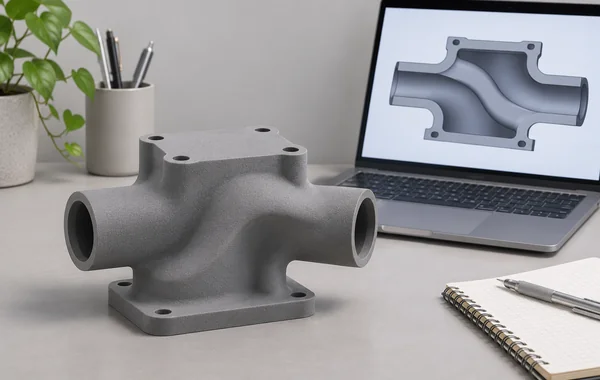
How to Verify Powder Removal Inside SLS and MJF Parts
To verify powder removal inside an SLS or MJF part, match the inspection to the channel. A borescope can show an accessible bend. A flow check can confirm that the main route passes air. Neither tells you what is in a blind pocket the camera cannot see. Mark those pockets on a sectional drawing and agree with the supplier how to check them before you approve the pilot run.
This guide covers polymer powder-bed parts such as nylon ducts, housings and fittings. It does not cover metal powder removal or establish suitability for medical, food-contact, pressurized or other regulated uses.
1. Give each branch its own acceptance check
Mark the inlet, outlet, branches, bends, restrictions and blind ends on a section view. Label each passage by what it does. A sealed cavity intended only to save weight calls for a different discussion from an air passage that must remain open. If a cavity empties into a space near a moving component or an optical surface, mark that interface too. Do not treat a clear main passage as proof that a blind branch is clear.
Unfused powder can remain in hollow features in both processes. Formlabs’ SLS design guide discusses access and escape holes for its equipment. HP’s MJF design guidance describes using drain openings to remove trapped powder. These are starting points for a design review rather than universal opening sizes.
2. Mark where the powder comes out
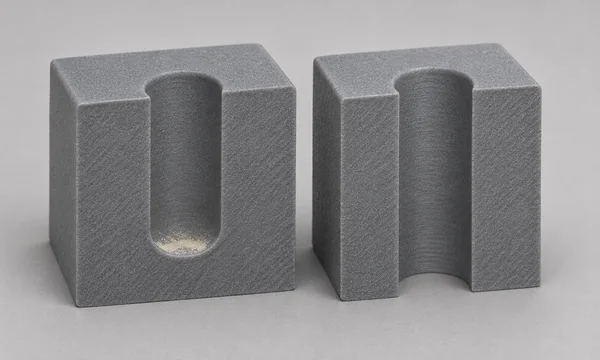
Request a marked-up section showing how each branch can be reached or cleared and where loosened powder leaves the part. A port that admits a probe may still be too small or poorly placed for the planned cleaning process. Check with the intended supplier using the actual route, access, material and post-processing. Protolabs’ guide to nylon SLS and MJF design identifies blind holes and other recessed geometries as potentially difficult to clean.
If the proposal adds an opening that must later be capped, include the cap and closure sequence in the review. Confirm whether closure changes fit, access for inspection, or the functional check. A drawing note that says “remove powder” does not resolve a branch the supplier cannot reach.
3. Pair the check with what could fail
| What you need to establish | Evidence to discuss | What it does not prove |
|---|---|---|
| An accessible port or bore is visibly clear | Defined visual or borescope check from marked access points | The condition of anything outside the field of view |
| The intended route passes air or another agreed test medium | A representative flow or restriction check, with defined setup and acceptance criteria | That every dead branch is clean, or that no loose material can come out later |
| A hidden junction can be cleaned on the proposed process | A sectioned pilot part or a representative coupon with equivalent geometry and processing | That every delivered production part is clean |
| Loose material must not reach a downstream component | An agreed collection or residue check, where feasible, with a defined handling sequence and pass criterion | Absolute cleanliness beyond the test conditions and detection limit |
Combine checks when you need different kinds of evidence. For example, a through-channel can pass a flow check while a blind side pocket still retains powder. Ask what the inspection can and cannot see, and agree which checks apply to samples and which apply to deliveries.
4. Qualify the hidden feature on the pilot run
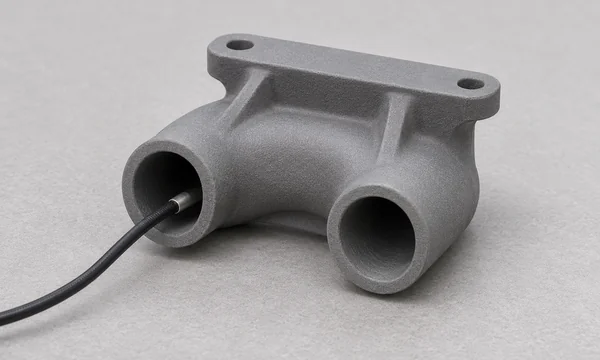
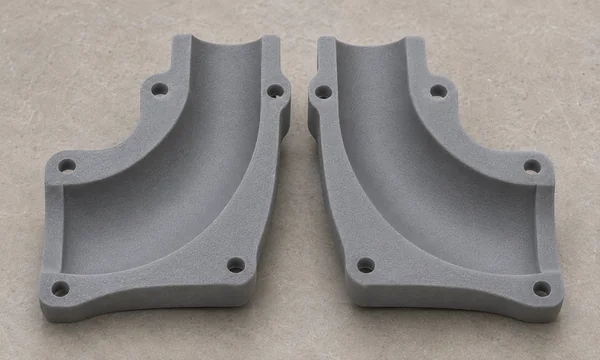
Example: Suppose a nylon air duct has a curved main passage and a blind side pocket left over from an early design. The assembly team can verify that air crosses the main passage, but that result says nothing about the pocket. If the pocket has no purpose, remove it. If it must stay, ask the supplier to propose an access point or a design split. Then check the main route and the pocket separately before approving the design.
For a coupon, match the features that make the real channel difficult: the smallest section, the bends, the access openings and the cleaning sequence. A straight open tube does not represent a narrow curved passage. If you cannot make a convincing coupon, discuss sectioning a pilot part. Record the design revision, process, material, cleaning state and sample IDs so you can tell which trial an observation belongs to.
5. Decide what to change if cleaning cannot be shown
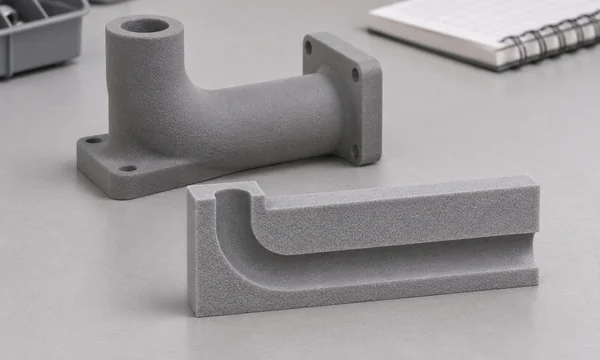
A one-piece print is worth reconsidering if you cannot verify a passage that matters to the assembly. Consider a split housing with accessible channels, a shorter or less restrictive passage, or a separate tube or fitting. A split adds interfaces and assembly steps, so assess the join and any sealing requirements. A service opening may preserve the one-piece shape but still adds a closure and inspection decision. Choose the route you can verify for the application, rather than choosing from the exterior model alone.
Zenbot’s servicio de impresión 3D lists SLS and MJF among its options, with project and inspection requirements subject to review. For a quote request, send the CAD model, a section view with critical passages marked, material preferences, intended use, and the evidence you need at pilot and delivery. Ask the supplier to flag passages it cannot inspect directly. For selecting a process in the first place, see the SLA, SLS and MJF comparison.
Preguntas frecuentes
1. Why can powder remain inside an SLS or MJF part?
Unfused powder surrounds the part during the build. A cavity that does not have suitable access or an escape route can retain some of that powder during cleaning.
2. Does a clean exterior show that the channel is clear?
No. A clean outside does not show the condition of a hidden bend, branch or pocket. Choose an inspection or functional check that addresses the internal feature directly.
3. How large should a powder escape hole be?
There is no universal size for every part. Ask the supplier to review the material, length, bends, narrow sections and cleaning method together, then validate the agreed opening on a representative sample.
4. Can a flow check replace internal inspection?
Only if the agreed requirement is limited to the flow condition the test actually measures. A clear through-route can coexist with residual powder in a blind branch. Add another check when debris or unseen pockets matter.
5. Can a borescope verify a curved channel?
It can show only the area its camera sees from the available access points. Record the inspection positions and use a different method for hidden regions that are critical to acceptance.
6. When is a sectioned pilot part useful?
It is useful when a hidden restriction or junction cannot be inspected from the ports and you need evidence that the cleaning method reaches it. It validates the sampled condition, not every future part.
7. Should a split design be considered for a difficult channel?
Yes, when a split improves access enough to justify the additional joint and assembly work. Review the mating surfaces, alignment and any functional requirements for that joint before approving it.
8. What should be on the drawing or RFQ?
Mark critical passages and interfaces on a sectional drawing. State the intended use, permitted access openings, cleaning and closure sequence, acceptance checks, and what evidence is required at pilot and shipment.

Acerca del equipo de Zenbot
El equipo de Zenbot elabora recursos sobre fabricación y compras para Zenbot China. Nuestras guías abarcan mecanizado CNC, fabricación de chapa metálica, impresión 3D, moldeo por inyección, PCBA y preparación de solicitudes de presupuesto, y ayudan a los equipos de ingeniería y compras a comparar opciones y definir los requisitos del proyecto. La viabilidad técnica, las especificaciones, los precios y los plazos de entrega requieren confirmación para cada proyecto.