



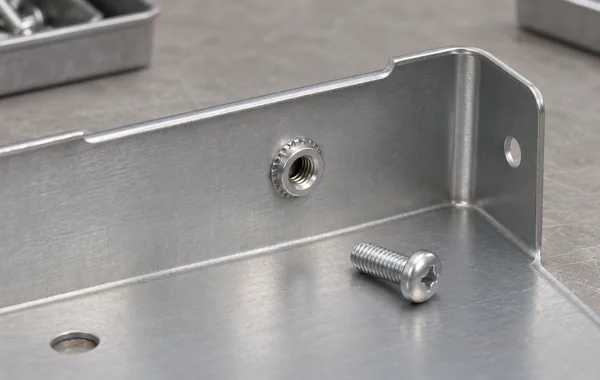
A Thread Gauge Passes. Will the Self-Clinching Nut Spin in the Panel?
A thread gauge can pass even when a self-clinching nut is not securely retained in the panel. The gauge checks the threads. It does not load the nut-to-sheet joint. If a spinning nut would stop your assembly line or leave a service cover stuck, read the torque-out result and its failure mode before you release the panel.
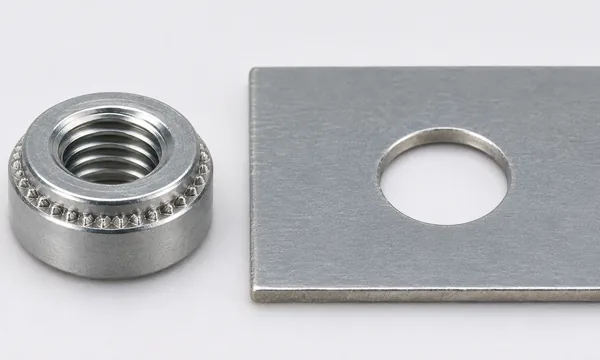
Start with the nut and sheet you are actually buying
Give the fabricator the released panel drawing, the exact fastener part number, the installation side and the finish sequence. Identify the sheet alloy or grade, condition and thickness at the fastener site. Check the fastener supplier’s requirements for sheet hardness, hole size and edge distance against the proposed panel. A nut with the same thread size can still have different clinching geometry or sheet limits.
PennEngineering’s self-clinching fastener handbook distinguishes torque-out, pushout and, where relevant, pull-through. Its self-clinching nut data reports performance for specified fasteners and test sheets. A published value describes the listed combination and test conditions. Set the acceptance limit for your own drawing. If you are still choosing a fastening system, start with the comparison of self-clinching nuts and rivet nuts.
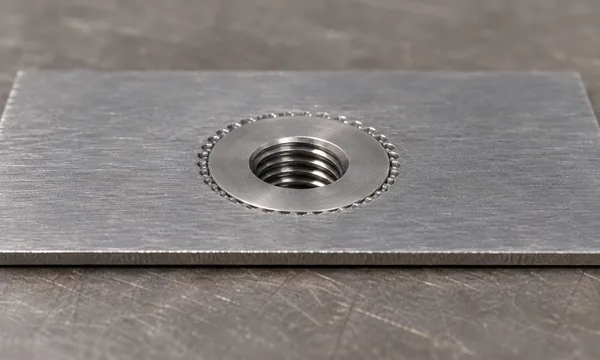
Find out which part moved or failed first
In a first-article report, write “thread gauge passed” on its own line. The retention result should show what load was reached and what happened at that load. A clean thread and a flush seat can look reassuring even when the joint did not meet its specified resistance to rotation.
| Check | What it answers | What to record |
|---|---|---|
| Seating and threads | Does the nut sit as specified? Are the threads usable in the required condition? | Location, seating criterion, visible damage and gauge result. |
| Torque-out | Does the nut resist rotation relative to the panel? | Method, measured torque, first failure observed and approved limit. |
| Pushout | Does the nut resist removal opposite to installation? | Test direction, measured force, first failure observed and approved limit. |
A peak torque value is not enough. If the nut turned relative to the panel, record the torque at the point called out by the agreed method. If the test screw stripped or broke first, record that outcome separately. It does not give you the nut’s torque-out value. If an agreed proof load was reached without rotation, report a pass at that load, not a measured failure torque. Torque-out is also different from the tightening torque for the assembly screw. Use separate sacrificial specimens where the checks would damage or change the joint.
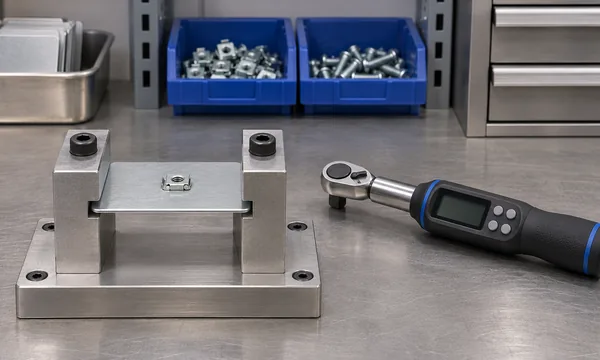
Choose the inspection stage before making samples
A pre-finish check catches installation problems while the seat is easy to inspect. A final-condition check can reveal coating in the threads or interference with a mating part. Write down whether hardware is installed before or after finishing. When the buyer requires retention evidence on the finished build, agree how to obtain it without treating a bare test coupon as the delivered panel.
A coupon can be useful when the test destroys the piece. Record the sheet and nut identification, hole preparation, press setup and finish sequence. If a flange or nearby bend limits tool access on the actual panel, decide whether the coupon represents that location before relying on its result. For design-stage checks, see the sheet metal enclosure design guide.
Decide what the sample releases
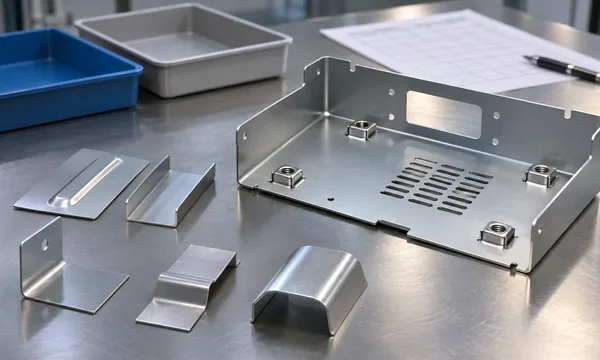
Suppose a controller panel comes back from coating with clean threads and all nuts visibly seated. During the agreed test, one sample nut rotates below the drawing’s minimum. Hold the affected build rather than approving it on the thread-gauge report. Link the tested location to the panel revision and hardware lot. Check whether the result came from the formed panel or a flat coupon, and confirm that the test setup can distinguish rotation from a screw failure before changing the press setup.
Zenbot can review hardware insertion as part of a sheet metal project. Send the panel drawing, fastener schedule, finish and acceptance requirements. Ask which checks are included in the quote and what a passing sample will release. Keep that decision and any limits in the first-article inspection record.
Frequently asked questions
1. Does a passing thread gauge prove the nut is secure?
No. A thread gauge checks the threads against the agreed criterion. Nut retention in the host sheet requires separate evidence when the project specifies it.
2. What is the difference between torque-out and pushout?
Torque-out checks how strongly the installed nut resists turning in the sheet. Pushout checks resistance to axial removal opposite to the installation direction.
3. What if the test screw fails before the nut turns?
Record that the test screw failed and the load reached. Do not report it as a measured torque-out value. Use the agreed acceptance rule to decide whether the result counts as proof at the required load or needs a retest.
4. Can we use a catalogue value as the acceptance limit?
Only after engineering has reviewed the fastener, sheet and test method behind the published value. Write the approved project limit and method into the drawing or inspection plan.
5. Can the supplier use a test coupon to check retention?
Yes, if the project accepts it and the coupon represents the fastener, sheet, hole preparation and installation process being approved. Review any difference in local geometry or tooling access.
6. Should the nuts be checked before or after powder coating?
Agree which checks belong at each stage. Early checks help assess seating or installation. Where the requirement concerns finished threads, fit or retention, specify evidence for the required final condition.
7. What if one nut spins during sample testing?
If rotation occurs below the agreed limit, hold the affected build. Record the location and test result, check how the sample was prepared, and obtain a disposition or retest before release.
8. Does a passing sample approve all future lots?
No. Record the approved revision and build scope. Agree what must be reviewed if the fastener, sheet, hole preparation, installation setup or finish sequence changes.

About Zenbot Team
Zenbot Team creates manufacturing and procurement resources for Zenbot China. Our guides cover CNC machining, sheet metal fabrication, 3D printing, injection molding, PCBA, and RFQ preparation, helping engineers and purchasing teams compare options and define project requirements. Technical feasibility, specifications, pricing, and lead times require project-specific confirmation.