



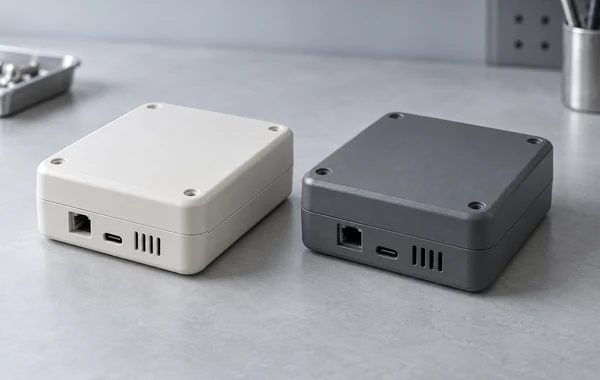
ABS vs. PC/ABS for Injection-Molded Electronics Enclosures: How to Choose
For a typical indoor electronics housing, ABS is a sensible material to investigate first. Add PC/ABS to the shortlist when the part faces tougher impacts, more heat, or a demanding flame requirement. Then compare actual grades. The name on the resin bag cannot tell you whether a thin snap hook will survive a drop or whether the wall beside a warm PCB will keep its shape.
Zenbot lists both ABS and PC/ABS among the materials it can review for injection molding projects. Start with the job the finished housing must do, then choose a grade and test it on molded parts.
ABS and PC/ABS at a glance
ABS stands for acrylonitrile butadiene styrene. It is common in molded housings partly because suppliers can offer grades with useful impact resistance, color options, and a good molded finish. INEOS Styrolution describes its Terluran GP-22 grade as a general-purpose ABS for housings. Its published properties belong to that grade.
PC/ABS blends polycarbonate and ABS. Its formulation can be adjusted for flow, impact, heat resistance, or appearance. For example, SABIC lists a thin-wall grade in its CYCOLOY range; other grades serve different needs. Compare the current data sheets of named candidates rather than assuming every PC/ABS blend behaves alike.
| Design question | ABS candidate | PC/ABS candidate | Evidence needed |
|---|---|---|---|
| Routine indoor handling | General-purpose or impact-modified grades may fit. | Worth quoting if the impact target is tougher. | Drop or impact test on molded parts. |
| Heat near components | Compare the grade with the housing’s hot spot. | Review higher-heat grades where needed. | Part temperature, exposure time, and distortion under load. |
| Visible finish | Many color and surface options exist. | Appearance grades are available too. | Molded color, texture, gloss, and an approved sample. |
| Flame requirement | Rated formulations are available. | Rated formulations are available. | Listing for the exact grade and relevant wall thickness. |
| Cleaner or sunlight exposure | Grade selection needs an exposure test. | Grade selection needs an exposure test. | Actual cleaner or UV conditions and finished-part results. |
| Budget | Quote a grade that meets the brief. | Quote against the same brief. | Part price, material supply, tooling work, and test scope. |
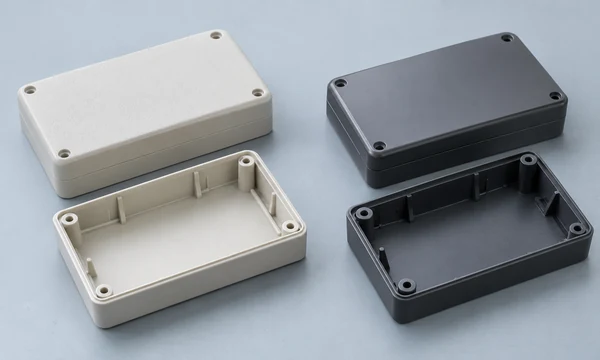
Material families overlap. A high-heat ABS may outperform a particular PC/ABS grade on the property you care about, while a high-flow PC/ABS may lack the flame rating another blend carries. Use the table to choose candidates, then look at the grade documents.
Start with the enclosure’s real operating conditions
Measure the temperature at the plastic, not only in the room. A power supply or tightly packed PCB may warm one corner of the housing much more than the rest. Record the highest expected temperature at that location, the time spent there, and any mechanical load on the wall. The resin supplier and molder can compare that duty with grade data. A softening temperature from a short laboratory test does not, on its own, establish a continuous operating limit.
Impact needs a scenario. A wall-mounted controller faces installation knocks; a handheld instrument may fall onto concrete. Decide where the part might land and what must still work afterward. Look closely at corners, snap hooks, screw bosses, and cutouts. They can crack even when a material’s laboratory impact figure looks reassuring.
Appearance is another part of the brief. Both families can be colored and textured, but the result depends on the grade, pigment, mold surface, and molding process. Mark the faces customers will see, where gate and ejector marks are acceptable, and any areas to be painted or marked. Zenbot’s injection molding DFM checklist covers the wall, rib, draft, and gate decisions that affect the finished part.
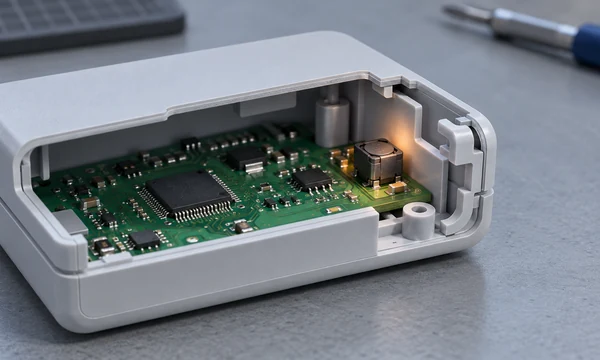
Treat flame ratings as a grade-and-thickness question
If the enclosure has a flammability requirement, give the supplier the required classification and the thinnest relevant wall section. “Flame-retardant plastic” does not identify a grade the supplier can verify.
UL Solutions explains that UL 94 classifications come from defined small-scale material tests and depend in part on specimen thickness. Flame-retardant grades exist in both material families. SABIC, for example, lists PC/ABS grades with ratings at stated thicknesses. Check the listing for the proposed grade and wall. A material rating does not certify the assembled device.
If an electrical safety standard applies to the finished device, include it in the design brief. The compliance team can then check what evidence is needed beyond the material listing.
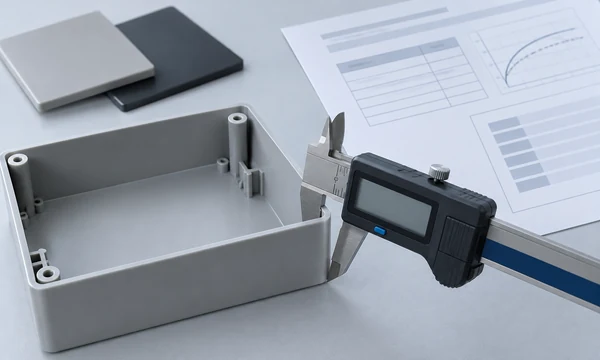
Test cleaners and environmental exposure with the actual grade
Which cleaner will touch the housing? “Wipe-clean” is too vague to guide resin selection. Name the fluid, concentration, contact time, and cleaning frequency. Test molded samples with that procedure and inspect stressed spots around snaps and screw bosses for cracks or discoloration. Those local features can fail while the broad wall still looks fine.
For an outdoor product, define its sunlight exposure, temperature cycling, and acceptable color change. Ask about UV-stabilized grades and other polymer families if needed. A brief outdoor trial tells little about years of exposure.
Does changing from ABS to PC/ABS require a new mold?
A resin change sends the part back through moldability review. ABS and PC/ABS grades may differ in flow, processing window, and shrinkage. The gate, cooling, packing, and critical dimensions deserve another look. Covestro’s mold-design guidance describes how material and molding conditions affect shrinkage.
With a new tool, compare grades while walls, ribs, and gates can still change. With an existing tool, a molding trial can show whether the alternative processes and whether its parts fit. It still needs the agreed performance checks. Put the approved grade and color on the drawing or controlled material specification; a later substitution should trigger another review.
Check assembly features during the trial. A boss that fits its insert in one resin may respond differently to installation or tightening in another. For metal hardware, see our guide to threaded inserts for plastic enclosures.
Put the material decision in the RFQ
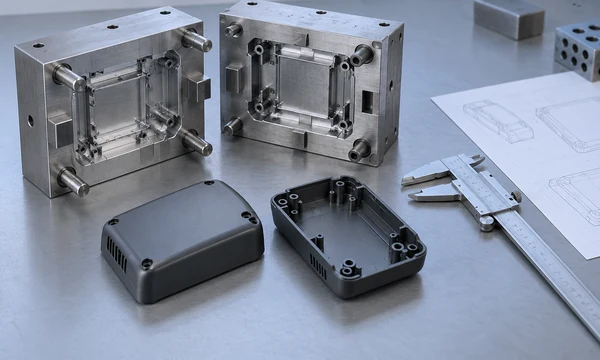
A desktop sensor hub that stays indoors might start with ABS. A portable test instrument with a demanding drop target may warrant PC/ABS candidates. These are starting points for a quotation, not material approvals. The RFQ needs enough detail for both options to be judged against the same product requirements.
Use one acceptance plan for both candidates. Otherwise, a lower quote may simply leave out a test or specify a less demanding grade.
| Review item | Put this in the RFQ or sample plan |
|---|---|
| Grade | Manufacturer, full grade designation, color, additives, and any approved alternative. |
| Environment | Ambient range, measured internal hot spot, exposure duration, cleaner, and sunlight conditions. |
| Loads | Drop or impact scenario, snap cycles, screw loads, and critical fit interfaces. |
| Electrical safety | Required material classification, minimum wall thickness, and product-level requirements. |
| Appearance | Cosmetic faces, color reference, texture or gloss target, and permitted molding marks. |
| Inspection | Critical dimensions, fit check, functional checks, sample quantity, and acceptance criteria. |
| Commercial scope | Prototype and production quantities, tooling status, finishing, and required records. |
If the grade is undecided, request separate assumptions and quotations for ABS and PC/ABS candidates. Send the CAD model and drawing at the same revision. Identify the dimensions that control the PCB, connectors, gasket, and fasteners. The manufacturing RFQ checklist covers the wider handoff.
Approve molded parts before releasing the material
Once the team has shortlisted grades, request current technical and compliance documents for each one. Have the molder review the tool plan and produce representative samples. Measure critical fits, inspect cosmetic areas, and run the impact, heat, cleaning, or safety checks defined for the product. Record the chosen grade, color, part revision, and acceptance results together. That gives purchasing and production an unambiguous material release.
Zenbot can review the enclosure, candidate materials, and tooling approach through its injection molding service. Send the CAD model, drawing, expected quantities, mating parts, and operating conditions. Confirm the available grade and test scope during the project review.
ABS vs. PC/ABS FAQs
1. Is PC/ABS always stronger than ABS?
It depends on what “stronger” means. Drop resistance, stiffness, and performance under heat are different tests. Compare named grades against the loads on this housing, then test its vulnerable features.
2. Is ABS good enough for a consumer electronics enclosure?
Often, yes. ABS is a sensible candidate for many indoor housings. Check the heat near components, expected handling, finish, and any flame requirement on the actual design.
3. Does PC/ABS automatically meet UL 94 V-0?
Only a specific grade can carry a verified rating, and the listed thickness matters. Check its current listing against the housing’s thinnest relevant wall. Device-level compliance is a separate review.
4. Which material is cheaper for an injection-molded housing?
General-purpose ABS is often the first grade to quote when cost matters. Compare finished-part quotations against the same quantity, finish, inspection plan, and performance targets. Material price alone misses tool changes and rejected parts.
5. Can the same mold run ABS and PC/ABS?
A molder may be able to trial both in one tool. Flow, shrinkage, and finished dimensions can change, so run the trial before promising interchangeable production parts.
6. Which is better if the enclosure is cleaned often?
The answer depends on the cleaner and the grade. Give the supplier the actual fluid and wiping procedure. Test molded parts, especially around stressed snaps and fasteners.
7. What information should I send for a material recommendation?
Send the 3D model and current drawing, expected quantity, finish, operating temperatures, impact and cleaning conditions, safety requirements, and mating PCB or hardware details. Mark any requirement the supplier may propose changing.

About Zenbot Team
Zenbot Team creates manufacturing and procurement resources for Zenbot China. Our guides cover CNC machining, sheet metal fabrication, 3D printing, injection molding, PCBA, and RFQ preparation, helping engineers and purchasing teams compare options and define project requirements. Technical feasibility, specifications, pricing, and lead times require project-specific confirmation.