




CNC Machining vs. Injection Molding for Low-Volume Plastic Parts: Which Should You Choose?
CNC machining is often the practical starting point for low-volume plastic parts when the design may change, demand is uncertain, or only a small batch is committed. Injection molding deserves a quotation when the design is stable and repeat orders can spread the tooling cost, especially if the part would take substantial machining time. Quantity alone cannot settle the choice.
For purchasing and engineering teams, the useful comparison is the cost of acceptable parts over the expected life of the design. A lower unit price can be expensive if a mold needs rework after the first build. Equally, avoiding a tool can mean paying for the same lengthy machining operations on every reorder.
This guide compares CNC machining vs. injection molding for low-volume plastic production. It focuses on tooling commitment, material approval, design changes, and the information needed for comparable quotations.
CNC machining vs. injection molding at a glance
| Decision factor | CNC machining | Injection molding |
|---|---|---|
| Starting point | Cut a part from plastic stock. | Fill a custom mold with molten resin and cool it. |
| Upfront commitment | Programming, setup, workholding, and material procurement. | Tool design and manufacture, trials, and sample approval. |
| Repeat-order economics | Cutting time remains part of each part’s cost. | Tooling can be spread across repeated production. |
| Design changes | Review the program, stock, and fixtures for the next batch. | Review whether the tool can be modified or needs replacement. |
| Geometry | Tool access, corner radii, and clamping affect feasibility. | Draft, walls, gates, parting lines, and ejection affect feasibility. |
| Material supply | Confirm the grade in the required stock form and size. | Confirm a suitable molding grade and its supply conditions. |
| Appearance | Agree acceptable tool marks and any secondary finish. | Agree texture, color, and permitted molding marks. |
| Validation | Approve the machined part against its production requirements. | Approve representative molded parts before releasing production. |
Zenbot’s CNC machining service and injection molding service provide starting points for a project review. Feasibility, available materials, pricing, and lead time need confirmation against your drawing.
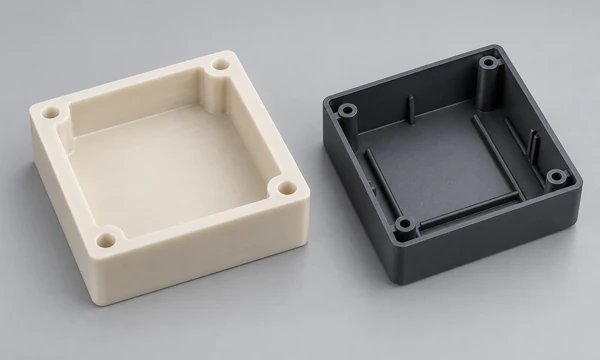
Compare total cost before comparing unit price
Ask both suppliers to quote the same deliverable: the same part function, approved material requirements, finish, quantity, and inspection scope. If one route needs a geometry change, price and review that version explicitly. Otherwise, two attractive prices may describe different products.
A simple first-pass calculation is:
Total batch cost = upfront cost + (quantity × variable cost per accepted part).
Use the same currency and commercial basis. Identify which costs are inside the variable price and which are separate. Tool trials, inserts, finishing, inspection reports, packaging, freight, duties, and taxes can change the comparison. Ask how rejected parts and replacement parts are handled rather than assuming a yield figure.
Hypothetical cost example: how the crossover changes the decision
The following numbers are invented to explain the calculation. They are not a Zenbot quotation or a market benchmark. Assume one unchanged part revision, one batch, and both processes meeting the same acceptance requirements. CNC setup is USD 500 and each accepted part costs USD 25. Molding tooling and initial setup total USD 5,000, with each accepted part at USD 5. These illustrative amounts include the assumed production and inspection scope; freight, duties, taxes, financing, storage, and later design changes are excluded.
| Accepted parts | CNC total | Molding total | Lower total in this example |
|---|---|---|---|
| 50 | $1,750 | $5,250 | CNC by $3,500 |
| 100 | $3,000 | $5,500 | CNC by $2,500 |
| 225 | $6,125 | $6,125 | Equal |
| 500 | $13,000 | $7,500 | Molding by $5,500 |
The crossover is (5,000 − 500) ÷ (25 − 5) = 225 accepted parts. That result belongs only to these assumptions. It is not a recommended switching quantity.
Now suppose a design revision adds a hypothetical USD 2,000 mold modification before that same batch, while the CNC setup remains unchanged. Molding’s upfront cost becomes USD 7,000 and the crossover moves to 325 parts. A real revision might also change the CNC price, material usage, or inspection plan. Requote both routes instead of carrying the old calculation forward.
Separate committed demand from a sales forecast
Run the comparison at the pilot quantity, the first firm production order, and a credible repeat-order scenario. A tool that looks economical at the annual forecast may remain underused if only the pilot order arrives.
Ask about recurring setup charges, minimum batch charges, material minimums, and price validity. For repeat orders, include those charges each time they apply. Compare delivery terms on the same basis, with freight and import costs shown separately where needed. A unit-price comparison should not hide the cash required before the first approved part ships.
Check whether the geometry suits both processes
When machining is a useful starting point
Accessible holes, pockets, flat faces, and turned features can suit machining. Deep narrow pockets, small internal corner radii, thin unsupported walls, and awkward clamping positions deserve early review. A housing cut from a large block may require considerable material removal and several setups. That work repeats with every part.
Protolabs’ CNC machining guide explains subtractive geometry constraints and notes that thin plastic parts can distort after unclamping. A successful toolpath is only one part of the feasibility check. Ask how the finished part will be held and inspected.
When molding deserves a closer look
A thin-walled housing with repeated ribs, bosses, and molded texture may justify tooling even when the order is described as low volume. Review wall transitions and draft before comparing prices. Undercuts may need side actions, inserts, or a design change, so a compact part is not necessarily a simple mold.
Decide where the mold separates and where the part is pushed out. Protolabs’ parting-line guidance shows why orientation and draft belong in the tool discussion. Mark sealing faces and visible surfaces so the supplier can flag conflicts early. Zenbot’s injection molding DFM checklist is a useful review companion.
If the product will move from CNC to molding, allow for two controlled manufacturing versions where necessary. Do not quietly add draft or move a boss without checking the mating assembly.
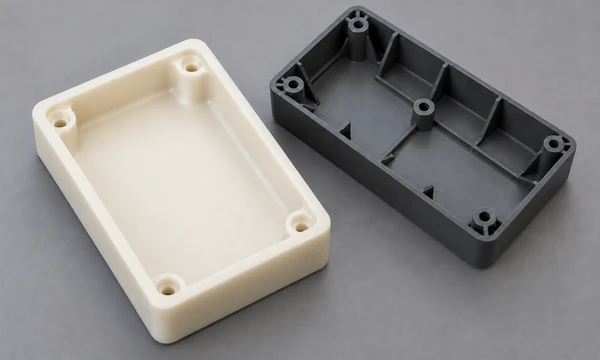
Specify the resin grade, then validate the process
A drawing marked only “ABS,” “nylon,” or “POM” leaves important questions unanswered. Ask for the manufacturer and grade, color, additives or reinforcement, and the required supporting documents. Verify stock availability for machining and resin availability for molding separately. Matching polymer-family names do not establish matching grades.
For a housing material comparison, see ABS vs. PC/ABS for injection-molded electronics enclosures. Keep that material decision tied to the loads, temperature, and exposure conditions of this product.
Machinability needs its own review. Heat from cutting, residual stress, and moisture uptake can affect dimensions. Ensinger’s machining recommendations for engineering plastics discuss conditioning and intermediate annealing where appropriate. Ask the stock supplier and machinist whether those steps are needed for the selected grade and geometry; do not add a generic heat-treatment instruction.
Molding introduces different questions. Resin flow and cooling influence how the cavity fills and how the part shrinks. Protolabs’ molding tolerance guidance relates material selection, tool design, and processing to final dimensions. A resin substitution therefore needs review even if the nominal CAD model is unchanged.
Where flow fronts meet, a weld or knit line can affect appearance and, in some cases, strength. The location depends on the flow path around features and gates. Protolabs explains these effects in its knit-line design guidance. Flag loaded snaps, screw bosses, and sealing areas for review rather than accepting a cosmetic-only assessment.
Agree tolerances and appearance before ordering
List the dimensions that control function and the datums used to measure them. A gasket groove, connector opening, and PCB mounting pattern may need different controls. Avoid putting the tightest tolerance on every dimension simply because one interface needs it.
Ask for an inspection plan that states the measurement method, conditioning requirements, and measurement temperature where relevant. Plastic dimensions can change with environment and time. For molding, agree when samples will be measured after production; for machining, confirm whether inspection follows any required conditioning or stress-relief step.
Keep cosmetic acceptance separate from dimensional acceptance. Define visible faces, acceptable marks, a color reference, and the finish required on those faces. Machined surfaces may need additional finishing. Molded texture depends on the tool surface and can affect draft requirements. Compare finished samples under agreed viewing conditions before treating appearance as approved.
If secondary machining is proposed for a molded fit feature, include its fixture, inspection, and per-part cost in the molding quote. A combined route can be worth considering, but it needs its own cost and acceptance plan.
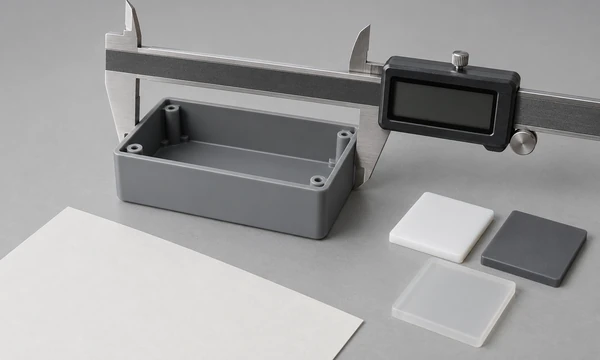
Put tooling responsibilities and changes in writing
Before approving a molding quotation, ask who owns the tool and where it will be stored. Confirm whether the price covers a complete mold or inserts used in a supplier-owned mold base. Ask what can be transferred to another supplier and what documentation is available.
- Define the approved part revision and the tool’s intended production scope.
- Separate tool design, manufacture, trials, and sample approval charges.
- State responsibility for maintenance, storage, repairs, and replacement.
- Agree how engineering changes are quoted and approved.
- Clarify transfer arrangements and any associated charges before placing the order.
A future design change may be a straightforward modification or may require a new insert or mold. Ask for a review of likely changes while tooling is still being planned. Do the same for CNC fixtures and programs: a revision can affect them too.
Use a pilot build to close the decision
Consider two illustrative purchasing situations. An industrial bracket has a simple accessible shape, a small firm order, and mounting holes that may move after field testing. CNC is a reasonable first route to quote. An enclosure has stable interfaces, repeated releases, and many features that are costly to cut individually. Quote molding alongside CNC and evaluate the tool commitment against realistic demand. These examples are decision prompts, not claims about completed Zenbot projects.
For either route, release production only after the agreed sample checks. Measure critical dimensions and test assembly fit with the actual mating components. Run the functional and environmental checks the product requires. For a CNC-to-molding transition, repeat the relevant tests on molded parts rather than treating machined prototypes as proof of molded performance.
Record the approved drawing revision, material grade, finish, sample results, and any agreed deviations. Purchasing should be able to tell exactly which version was approved and what a reorder must reproduce.
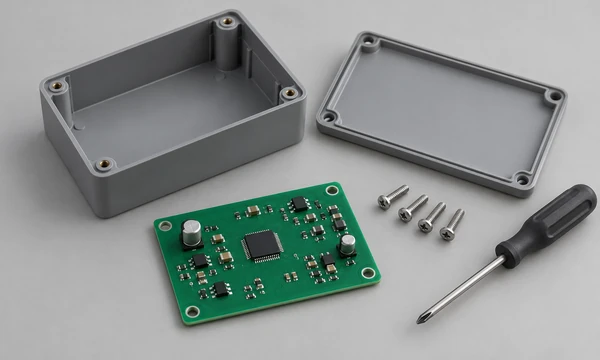
Request comparable CNC and molding quotations
Send the CAD model and drawing at the same revision, the pilot quantity, repeat-order scenarios, and the delivery destination. Include critical tolerances, material requirements, cosmetic faces, inserts or other hardware, and the inspection records needed. Identify unresolved features and say whether process-specific changes can be proposed.
Ask each quotation to separate upfront costs from recurring costs and to list exclusions. Request a proposed sample approval sequence and a project-specific schedule, including material procurement and any tooling trials. Zenbot’s manufacturing RFQ checklist covers the broader file handoff.
For a process review, email info@zenbotchina.com with the current files and quantity scenarios. Ask for CNC and molding options against the same acceptance requirements, with any design differences clearly identified.
Frequently asked questions
1. Is CNC machining always cheaper for low-volume plastic parts?
No. A simple machined part with uncertain demand may favor CNC, while a stable part that is expensive to machine may justify molding sooner. Compare total cost at realistic order quantities, including setup, tooling, inspection, finishing, and expected changes.
2. At what quantity should I switch to injection molding?
There is no universal quantity. Calculate the crossover from quotations for the same approved requirements, then test it against repeat-order demand and design-change risk. A numerical crossover is useful only if both processes can produce acceptable parts.
3. Can CNC-machined parts be used as production parts?
Yes, when the specified stock grade, geometry, finish, and inspection plan meet the application requirements. Treat them as controlled production parts with a released drawing and acceptance criteria, rather than assuming a successful prototype is enough.
4. Will machined ABS behave exactly like injection-molded ABS?
Do not assume equivalence from the polymer name. Confirm the exact stock and molding grades, additives, and required performance. Machined samples can support fit checks, but a molding release needs representative molded samples and the relevant functional tests.
5. Which process is better for tight tolerances?
Review the specific feature, material, and measurement conditions. CNC can be attractive for accessible precision features, but plastic can move after cutting. Molded dimensions depend on tool design, shrinkage, and process control. Have the supplier confirm each critical tolerance.
6. Can I start with CNC and move to molding later?
Yes. Keep the molding design in view during the CNC stage, then complete a fresh moldability review before tooling. Account for draft and other geometry changes, and recheck assembly fit on molded pilot parts before approving production.
7. Does paying for a mold mean I own it and can move it?
Confirm that in the quotation and purchase terms. Ask who owns the tool, where it is stored, what documentation comes with it, and what transfer or maintenance charges apply. Do not treat a tooling line item as a complete ownership agreement.
8. What should I send for a fair CNC-versus-molding quotation?
Send the revision-controlled CAD model and drawing, critical dimensions, material requirements, cosmetic criteria, pilot quantity, repeat-order scenarios, and delivery destination. Ask for separate setup or tooling costs, per-part costs, sample approval scope, and any proposed process-specific design changes.

About Zenbot Team
Zenbot Team creates manufacturing and procurement resources for Zenbot China. Our guides cover CNC machining, sheet metal fabrication, 3D printing, injection molding, PCBA, and RFQ preparation, helping engineers and purchasing teams compare options and define project requirements. Technical feasibility, specifications, pricing, and lead times require project-specific confirmation.